Monday, October 24, 2016

October 24 - Leonard Matlovich

Leonard Matlovich

Leonard Matlovich was, next to Harvey Milk, the best-known gay man in America in the 1970s. Unlike Milk, though, Matlovich's name has sadly been largely forgotten over the decades. He graced the cover of September 8, 1975 issue of Time magazine with the headline "I am a homosexual," making him the first openly gay person to appear on the cover of an American newsmagazine. Matlovich was also the first man to purposely out himself in the U.S. military, an action which led to his Time cover.

Matlovich was born in Georgia in 1943, the son of a career Air Force sergeant who spent his childhood living on military bases. It was never a question that he would join the armed forces, which he did at 19, soon deploying to Vietnam for three tours. He came out to his friends in the 1960s but kept his sexuality hidden from the Air Force. He frequented gay bars and came to understand the discrimination against gays as similar to what African Americans faced. In 1974, Matlovich contacted gay activist Frank Kameny, and, together with the ACLU, they planned a test of the military's ban on gay members. Matlovich came out to his commanding officer on March 6, 1975, and his challenge to the military became public two months later when The New York Times wrote about it; this article would be how Matlovich's father discovered his son's sexuality. His discharge hearing was held in September, at which time the Air Force asked Matlovich to sign a contract pledging to never practice homosexuality again in exchange for keeping his position. He refused and was discharged in October, despite being the recipient of a Bronze Star and a Purple Heart. He sued for reinstatement, which was granted in 1980. Still unwilling to accept a gay servicemember, the Air Force offered him a settlement instead; Matlovich accepted, assuming they would find some other reason to discharge him later on.

Throughout the 70s, Matlovich advocated for several gay organizations, leading campaigns against Anita Bryant and John Briggs. In the 80s, he fought for AIDS education and treatment. He died of the disease in 1988. His tombstone, now a site of pilgrimage for many gay veterans, does not bear his name. It reads: "A Gay Vietnam Veteran | When I was in the military, they gave me a medal for killing two men and a discharge for loving one."

Sunday, October 23, 2016

October 23 - Frida Kahlo

Frida Kahlo

Perhaps Mexico's most celebrated painter, Frida Kahlo lived a short, tumultuous life. Kahlo grew up in Mexico City and had what she described as a very sad childhood. Her mother was cruel and fanatically religious, which led to Frida's oldest sister, Mathilde, running away as a teenager. Frida contracted polio at age six, which caused her leg to become deformed and for her to begin schooling a year behind her peers. She became introverted, which proved to be beneficial when her hobby of reading landed her in an elite private school, where she planned to study medicine. At 18, however, Frida was in a horrible bus accident; she spent a month in a hospital after a handrail impaled her pelvis and broke her ribs, legs, and collarbone. She would experience residual pains for the rest of her life, and the accident effectively ended her dreams of becoming a doctor. Instead, she turned to art, a hobby she'd always enjoyed but had perfected during her recovery. She began a relationship with another Mexican artist, Diego Rivera, who was twice her age; they married in 1929, right around the time Kahlo's artistic style changed and began incorporating elements of Mexican folk art, indigenous culture, and mythology, such as bright colors and symbolism. Much of Kahlo's work also references reproduction, as she was incapable of having children and suffered several miscarriages.

Kahlo's marriage to Rivera was a further source of stress for the artist. She had several affairs with women, which did not bother her husband, but her affairs with men angered him. Rivera had his share of extramarital relationships as well, including one with Frida's younger sister, Cristina, which led to a divorce in 1939. They remarried a year later, but their relationship remained troubled. In the following years, Kahlo's work began to find a larger audience in America, and she was lauded as something of a star in New York. She was especially celebrated for her depictions of the female form and for the surrealism of her work, particularly her famous self-portraits. Years later, in 1953, Frida's right leg was amputated due to gangrene, leading to another bout with depression. She died less than a year later after fighting a bronchial infection, though her nurse at the time believes it may have been suicide by painkiller overdose. The final thing Kahlo drew was a black angel. Despite a warm reception in the late 1930s in America, it wasn't until decades after her death that Kahlo's work became more widely known and respected as a growing awareness of Mexican art, called Neomexicanismo, took hold in the 1970s and 1980s. She's now recognized as a leading feminist voice among painters.

Saturday, October 22, 2016

October 22 - Gertrude Stein

Gertrude Stein

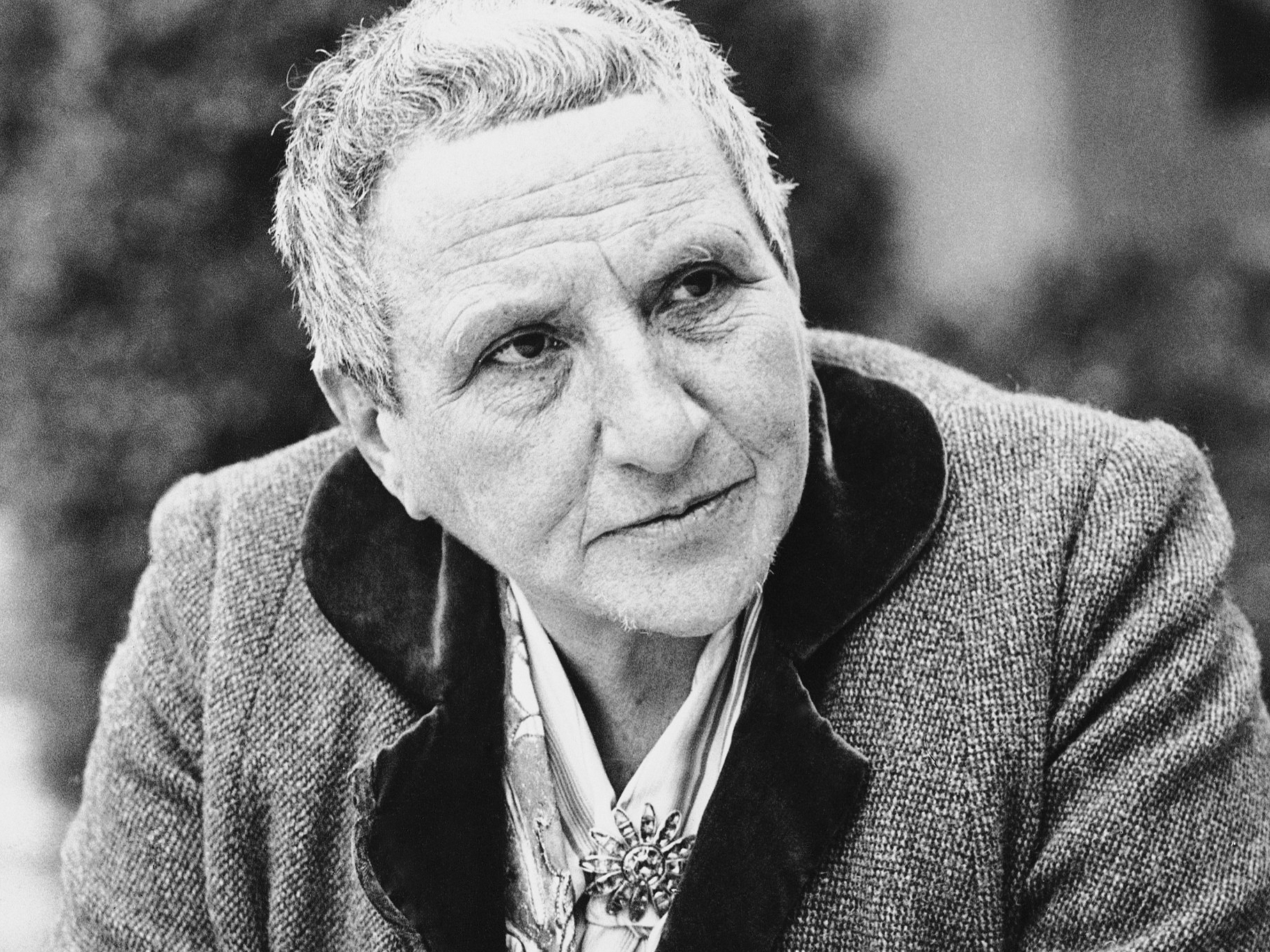
A leading figure in modernist literature, Gertrude Stein is perhaps best known for her friendships with the Parisian elite of the 1920s such as F. Scott Fitzgerald, Pablo Picaso, Ernest Hemingway, Henri Matisse, and Ezra Pound. What started as an impromptu gallery of sorts for Matisse eventually blossomed into a weekly meeting where artists and writers would share work and ideas, forming the foundational voice of what Stein famously called the "Lost Generation." Though born and raised in America, Stein moved to Paris in 1903 and lived most of the rest of her life there. She met her partner, Alice B. Toklas, in 1907, and she would become a huge influence on Stein's writing. Stein is credited with writing one of the very first coming out stories, Q.E.D., which was not published until after her death. She is now described as "modernist," portraying everyday people and objects in her writing, and Tender Buttons (1914) is probably the best example of such. Stein's most popular work, however, was her sort-of memoir, The Autobiography of Alice B. Toklas, a memoir of Toklas's and Stein's lives written by Stein as if in the voice of Toklas. It is significant for its open portrayal, in the 1930s, of a lesbian relationship; it is ranked by Modern Library as one of the greatest nonfiction books of the 20th century. Her time living as a Jew in Nazi-occupied France is also of some interest to historians; it has been guessed that Stein saved her own life (and her partner's) through a collaboration with the Vichy government, in which she aided the condemnation of other Jews in exchange for her freedom. Stein died of stomach cancer in 1946.

Friday, October 21, 2016

October 21 - Barney Frank

Barney Frank

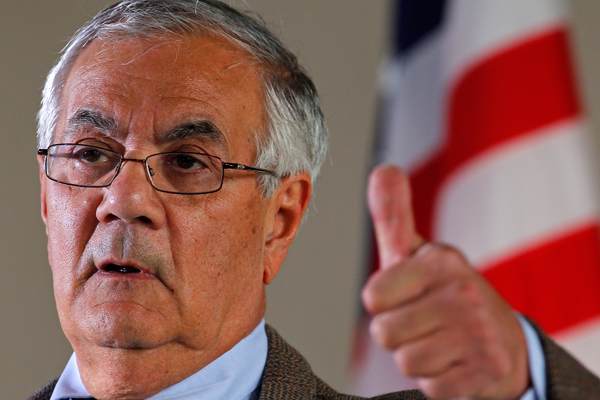
Barney Frank is the first member of Congress to voluntarily come out publicly when he did so in 1987, seven years after first being elected to the House of Representatives. A Democrat representing Massachusetts, Frank served for over thirty years, including a stint as chairman of the House Financial Services Committee from 2007-2011. He is known for being a co-sponsor on the Dodd-Frank Act of 2010, the most significant financial regulation bill since the Great Depression. Frank is also well known for having been one of the quickest and wittiest members of Congress. Frank was a staunch supporter of civil rights. He supported reparations for Japanese internment during WWII; he co-sponsored an amendment to apply equal rights to gender differences; he was pro affirmative action; he helped write the 1990 Immigration Act, which excluded LGBT people from being denied entrance to the US based on their sexuality; he was a proponent of same-sex marriage (and even married his own partner in 2010); and he founded the National Stonewall Democrats in 1998, the national LGBT Democratic organization. Throughout his career, Frank maintained 100% ratings from both the NAACP and the Human Rights Campaign for his civil rights stances. Though he retired from Congress in 2013, he remains active in political circles and released his memoir Frank in 2015.

Thursday, October 20, 2016

October 20 - Walt Whitman

Walt Whitman

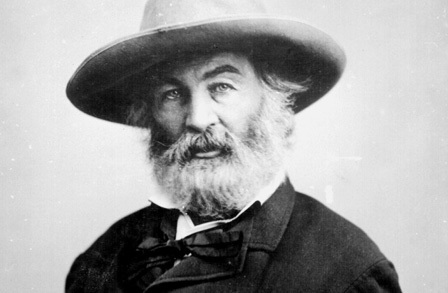
If you were ever forced to read poetry in high school, chances are good that you read Walt Whitman at some point. "I Hear America Singing," from Whitman's groundbreaking collection Leaves of Grass is a love letter to his country, and it's become something like the national anthem of poems. Whitman is inarguably America's greatest poet, and this is his celebration of the place that made him. Like most great artists, however, Whitman was not always celebrated during his life. Leaves of Grass was controversial for its time, condemned frequently for its overt and hidden allusions to sexuality, in particular Whitman's love for other men. He had many close relationships with male admirers, including a friendship with Oscar Wilde, and this was expressed in his poems. One of his most famous works, "Song of Myself," even includes a reference to oral sex, and the 1860 edition of Grass included a group of poems called "Calamus" promoted and reveled in "adhesive love," a now outdated term used to describe same-sex attraction. The book was often banned, but it's now recognized as a landmark achievement in both American poetry and poetry as a movement; Whitman is called "the father of free verse" for his long, lyrical lines that didn't adhere to poetic rules and could more fully embrace the rambling ways of nature and thought. He was free and open with his sexuality at a time when American societal strictures were harshly anti-gay.

Wednesday, October 19, 2016

October 19 - Ellen DeGeneres

Ellen DeGeneres

It's difficult to think of any public figure who has changed the contemporary conversation about LGBT issues more than Ellen DeGeneres. Her sitcom Ellen really altered the perception of gay people in a large part of America; for many Americans, it was likely the first time anyone they'd "known" had come out and told stories related to the gay experience, such as public affection, first-time intimacy, and same-sex marriage. Even though Ellen only lasted one season beyond the character's coming out, it was landmark event: DeGeneres was the first openly lesbian actor to play a lesbian character on television. She played another lesbian character on The Ellen Show in 2001, which wasn't nearly as successful as her 90s sitcom, but in the interim, Ellen became a cultural icon and representative of the LGBT community. She was vital in the late 1990s visibility of gay people, thanks largely to her highly publicized relationship with Anne Heche. Her coming out paved the way for some of television's most lasting LGBT series, such as Will & Grace, Queer as Folk, The L Word, and others. Since then, Ellen has permeated nearly every avenue of entertainment, from television (her popular daytime talk show has been on the air since 2003 and has picked up 38 Emmys) to film (Finding Nemo and Finding Dory are two of the highest-grossing animated films of all time) to hosting (she was the first openly gay person to host the Academy Awards in 2007) to writing (each of her four books have been New York Times bestsellers) to humanitarianism (she is a spokesperson for the Human Rights Campaign and served as special envoy for Global AIDS Awareness). Ellen also spoke out against Prop 8 following her marriage to Portia de Rossi in 2008. In so many ways, Ellen has opened up the conversation about being gay in America. Her openness and honesty have done much for the normalization of LGBT people and causes over the past 20 years.

Tuesday, October 18, 2016

October 18 - Jose Sarria

Jose Sarria (Empress Jose I, the Widow Norton)

Jose Sarria was a jack of all trades with a fascinating history. He grew up in San Francisco, the son of a Colombian immigrant, and enlisted in the army shortly after the attack on Pearl Harbor. His small stature, though (4'11") prevented him from joining... until he seduced a major in the recruitment office into approving his enlistment. Sarria served in the Signal Corps and was eventually called up to Intelligence because of his fluency in several languages. He made his way through several other far less glamorous assignments before being discharged in 1947 as a Staff Sergeant. Sarria returned to California with plans of becoming a teacher, which never came to be when he was arrested for solicitation. Sarria dropped out of college and started singing and waiting tables at the Black Cat Bar. This led to a regular gig, at which Sarria dressed in drag and encouraged patrons to be open about their sexuality (since it was technically illegal to be gay in public), parodying popular songs such as in "God Save Us Nelly Queens." He routinely fought back against bar raids by police, educating gay men and drag queens on what to say and do to not be arrested, and formed the League for Civil Education, a gay support group for those caught in raids.

In 1961, Sarria, now a well-known San Francisco figure for his drag shows, became the first openly gay candidate for public office when he ran for the Board of Supervisors. He did not win, but that didn't stop Sarria from serving the gay community. A year later, he formed the Tavern Guild, the country's first gay business assocation, which also raised money for legal fees and bail for those arrested at gay bars. He later formed the Society for Individual Rights, a group which supplied "pocket lawyers," booklets with information about what to do if you were arrested at a gay bar or harassed by police. Later in life, Sarria became a restaurateur and continued performing in drag as Empress Jose I, the Widow Norton, even appearing in the film To Wong Foo, Thanks for Everything, Julie Newmar. In 1965, he founded the Imperial Court System, now the second largest LGBT organization in the world, a grassroots network of charities that embraced drag culture; Sarria headed the organization for over 40 years. Jose Sarria died of cancer in 2013 and was buried in drag and with full military honors.